
Machine Learning FAQ
How do instruct tuning, tool use, and reasoning-style training differ?
Instruct tuning, tool use, and reasoning-style training are three different ways of shaping model behavior after basic pretraining.
Instruct tuning
This teaches the model to turn user prompts into useful assistant responses. It is mainly about instruction-following, response formatting, and general helpfulness.
Tool-use training
This teaches the model when and how to call external systems such as calculators, search, code execution, or APIs. The model is no longer expected to do everything internally. It learns a pattern like: decide a tool is needed, emit the tool call, then incorporate the tool result.
Reasoning-style training
This teaches the model to spend more effort on multi-step problems, often by encouraging longer and more deliberate problem-solving behavior.
These three are related but not interchangeable:
- instruct tuning is about being a better assistant
- tool use is about using external capabilities
- reasoning-style training is about doing harder multi-step thinking more deliberately
They can also be combined. A model can be instruction tuned, tool aware, and reasoning capable at the same time.
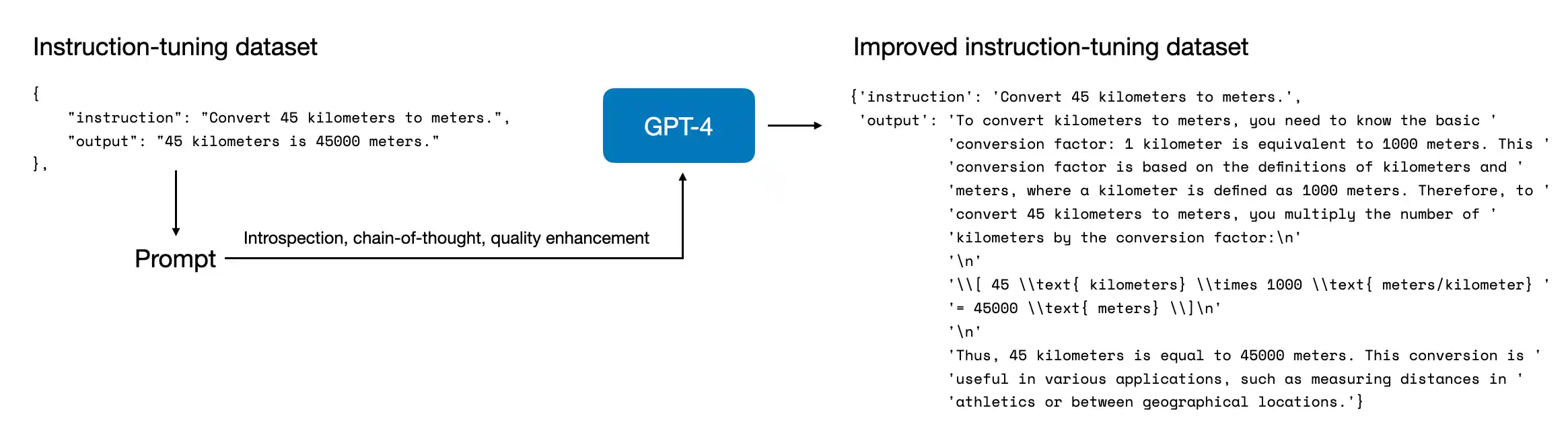
The repo’s dataset-generation materials also highlight reflection-style refinement, which fits the same general idea: once pretraining is done, later stages can reshape how the model solves and presents problems.
In short, instruct tuning teaches the model to answer requests well, tool-use training teaches it to rely on external tools when needed, and reasoning-style training teaches it to handle harder multi-step problems more deliberately.